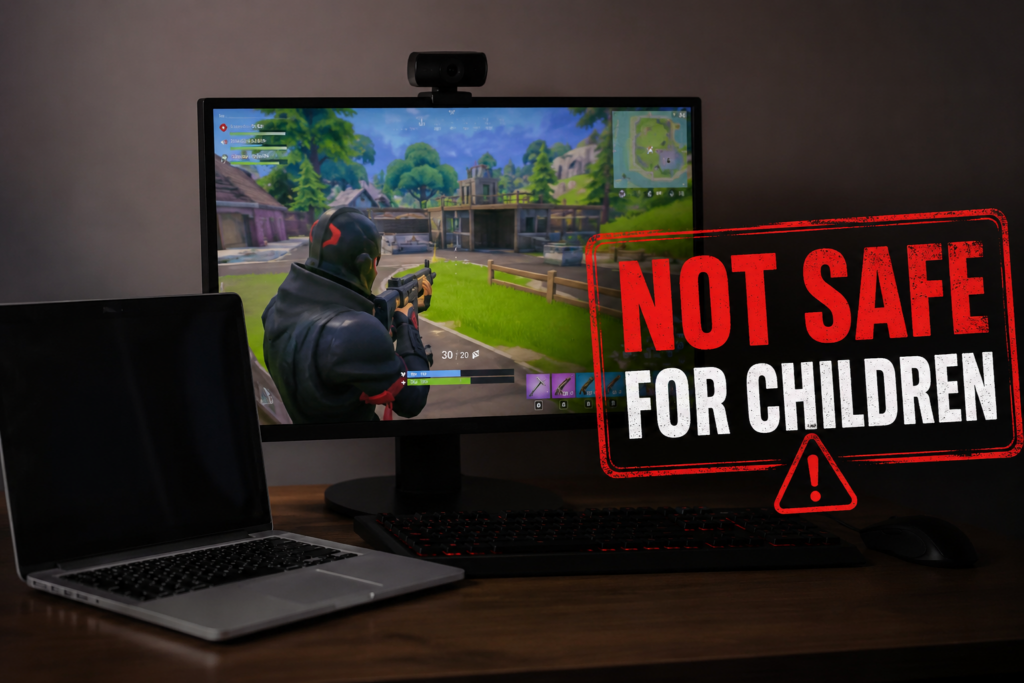
Online games have become a normal part of childhood. Many children play games on computers, phones, tablets, PlayStation, Xbox, Nintendo Switch, and other devices. Some games can be fun, creative, and even educational. They can help children solve problems, work in teams, and communicate with friends.
However, online games can also create serious risks for children. Parents should understand these risks before allowing children to play online, especially games that include chat, strangers, purchases, or user-created content.
1. Children Can Talk to Strangers
One of the biggest risks in online gaming is communication with strangers.
Many multiplayer games allow players to use text chat, voice chat, private messages, or friend requests. A child may believe they are talking to another child, but there is often no easy way to know who is really behind the account.
Adults can create fake profiles and pretend to be younger than they really are. They may try to become friendly with a child, ask personal questions, move the conversation to another app, or request photos and private information.
Children should understand that a friendly player online is still a stranger unless they personally know that person in real life.
2. Personal Information Can Be Exposed
Children may accidentally share too much information while playing.
They might mention their real name, age, school, suburb, birthday, social media username, or where their parents work.
Even small pieces of information can become dangerous when they are combined.
For example, a child may tell one player what school they attend and later tell another player which sports club they visit every weekend.
Children should be taught never to share passwords, addresses, school information, phone numbers, private photos, or other personal details through games.
3. Cyberbullying Can Happen
Online gaming communities are not always friendly.
Children may experience insults, threats, discrimination, harassment, or embarrassing messages from other players. Some players become aggressive when they lose and may target another person repeatedly.
Cyberbullying can be especially difficult because it may continue after the game ends through social media, messaging apps, or gaming accounts.
Parents should encourage children to report abusive players, block them, and speak to a trusted adult if something makes them uncomfortable.
4. Some Content Is Not Suitable for Children
Not every game is designed for young players.
Some games contain violence, strong language, gambling-like systems, sexual themes, horror, drugs, or other mature content.
Even games that look colourful and child-friendly may contain user-created content that is inappropriate.
Parents should check the game’s age rating and learn about its content instead of choosing a game only because it is popular.
5. Online Games Can Encourage Spending
Many modern games are free to download but make money through in-game purchases.
Children may be encouraged to buy characters, skins, weapons, virtual currency, battle passes, or special items.
A child may not fully understand that virtual coins can represent real money.
Some games also use random reward systems where players spend money without knowing exactly what they will receive. These systems can encourage repeated spending and may feel similar to gambling.
Parents can reduce this risk by using parental controls and requiring a password before purchases.
6. Scams and Account Theft Are Common
Gaming accounts can have real value.
Criminals may try to steal passwords, gaming accounts, virtual items, or payment information.
A child might receive a message saying, “Click here for free coins” or “Log in here to get a free skin.”
The website may actually be fake and designed to steal their username and password.
Children should never enter their gaming password into unknown websites or click suspicious links sent by other players.
Using strong passwords and two-factor authentication can also help protect gaming accounts.
7. Gaming Can Affect Healthy Habits
Another problem is excessive gaming.
Children may spend many hours playing because online games are designed to keep players interested. They may want to complete another match, unlock another reward, or continue playing with friends.
Too much gaming can affect sleep, physical activity, homework, family time, and other important activities.
Parents do not necessarily need to completely ban gaming. Setting clear limits can be more effective.
For example, children can have agreed gaming times and be encouraged to take regular breaks.
Parents Should Stay Involved
Online games are not automatically dangerous, and many children enjoy them safely. The important thing is supervision and education.
Parents should know which games their children are playing, understand who they communicate with, use parental controls, check privacy settings, and have regular conversations about online safety.
Most importantly, children should know that they can speak to their parents if something strange, frightening, or uncomfortable happens online.
The internet can be an exciting place for children, but online gaming should be treated like any other online activity: with awareness, boundaries, and protection.